
Managing Chemistry Burnout and Academic Pressure in 2026: A Guide for Students

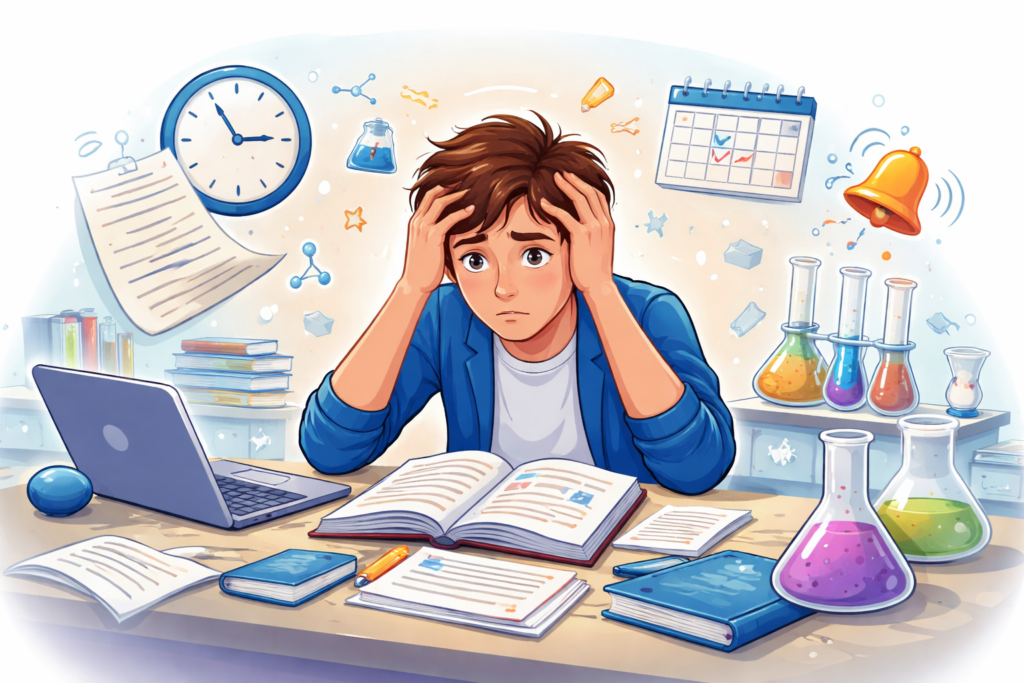
The academic environment in 2026 presents students with increased speed and digital resources which create higher academic challenges than any previous time. For students pursuing STEM degrees, chemistry functions as their essential course which demands them to understand all scientific principles beyond basic memorization. The increasing demands of laboratory work and academic lectures lead to burnout which presents itself as an unavoidable yet distressing consequence.
You are not the only person who feels completely frozen when facing a molecular geometry assignment. The term chemical burnout describes a state which goes beyond simple fatigue because it produces a mental block that prevents learning and problem-solving abilities from working well.
Understanding the Chemistry of Burnout
Burnout occurs when students invest more effort than they receive from their learning tools. This imbalance makes it hard to reach their academic goals. In 2026, we have more access to data and digital resources than ever before. However, this flood of information makes decision-making harder and increases stress.
Many students find that complex subjects exacerbate their academic anxiety. We’ve looked at how student stress connects to chemistry. Matching theory with lab work presents particular difficulties. These challenges can impact mental health and performance over time.
The Stages of Academic Fatigue
To manage burnout, first understand that it develops over time, not in one moment. Research shows that people’s engagement and cognitive function decline in a clear pattern.
The Overdrive Phase: You try to handle more challenges by giving up sleep and time with friends
The Chronic Fatigue Phase: Your energy drops, and it gets harder to focus in lectures
The Cynicism Phase: You start feeling frustrated or resentful about your course material. This replaces your curiosity
The Burnout Phase: Total exhaustion sets in. You feel detached from your academic goals
Detecting signs of academic struggle early is key. This helps to intervene before students face serious issues.
Signs You Are Hitting the Wall
You can find out your current state by looking at your weekly performance. This time frame can help you avoid complete burnout. Watch for these signs and behaviors to detect your condition:
Cognitive Fog: You read a paragraph on stoichiometry three times. You still can’t understand the concept
Avoidance Behaviors: You could clean your room, sort files, or browse social media. This can keep you from opening your chemistry textbook
Physical Symptoms:
- Ongoing headaches
- Irregular sleep patterns
- A heavy feeling when sitting at your desk
Loss of Motivation: Tasks that used to be manageable now feel insurmountable
Strategies for Academic Resilience Recovery matters as much as productivity in today’s chemistry curriculum
1. Implement the Pomodoro Technique for Labs
Studying chemistry means solving tough problems. These problems get even harder after three hours of nonstop work. Divide study time into 25-minute work sessions. Take a 5-minute break after each session. The approach protects against cognitive overload which results in burnout.
2. Focus on Foundational Gaps
People feel stress when learning complex material without enough basic knowledge. You should review algebra and basic atomic structure first. This will help you solve your thermodynamics problems. The best progress path requires you to first make a backward movement.
3. Track Your Stress Load
Data can be your most valuable resource. Alongside your study time, keep a straightforward journal of your stress levels. The research lets you see patterns. You tend to feel more stressed every Tuesday before your lab report is due.
See also: Advanced Digital Architecture 925151727 for Businesses
The Human Side of STEM
Many people think STEM students are entirely rational and don’t feel emotions. Top researchers and scientists succeed by blending human and scientific aspects of learning. Seeing yourself as a machine that just produces answers will cause you to break down in the end. You build resilience by knowing you need sleep, food, and social time as a student.
Prioritising Mental Health
Studying more won’t fix burnout. Instead, smarter study methods and better rest are the real solutions. In 2026, many universities have introduced wellness windows into their curricula. Use them for your benefit. If your school does not provide them, establish your own version of them. Your brain needs breaks from studying. Spending time outdoors and engaging in non-academic activities helps it relax. This is important for creative problem-solving.
The Power of Peer Help
Never underestimate the value of studying in a group. Chemistry requires social interaction because it depends on collaborative work. When you explain a concept to another person, you must arrange your ideas because this process differs from studying a textbook. If you feel like an island, reach out. Most people in your surroundings share the same feeling of pressure that you experience.
Balancing Modern Demands
Students in 2026 juggle their studies with part-time jobs. They also try to keep social connections and manage constant information from digital sources. High-stakes chemistry courses add to current pressures. This makes it hard for people to keep their balance. It’s clear that the old way of making people finish all tasks alone is no longer realistic due to today’s needs.
Recognizing your limits helps you reach your full potential. This journey leads to personal growth and professional progress. Tutor help, peer study groups, and academic services support students in reaching their semester goals. They make managing workloads easier and more effective.
Moving Forward: Sustainability Over Speed
Your goal should be more than just passing your online chemistry classes. You want to keep your scientific knowledge and stay excited about science. Your capacity to value chemical processes will vanish if you reach the point of burnout. You create a sustainable path to graduation by managing your workload. It’s important to know your limits and ask for help when things get tough.
Education is like a marathon. It needs steady effort over time, not just quick bursts of energy. The chemistry degree is tough, but it shouldn’t define a student’s skills. Also, their health must not be at risk. Keep your curiosity as you organize tasks. Allow yourself to make mistakes while learning.